Renewable Power USA, LLC, serving the COACHELLA VALLEY with PROVEN House Solar Power, Professional Installation and Cost Savings for the CUSTOMER.
YOUR HOME, YOUR ENERGY, OUR RESPONSIBILITY:
Renewable Power USA, LLC, is a trusted solar company that has helped hundreds of homeowners switch to clean, affordable energy. Our customers are reducing their electric bills, protecting themselves from rising utility costs, and taking control of their energy future. With a local, hands-on approach, we make going solar simple, efficient, and financially rewarding from start to finish. The following information is designed to answer all questions based on all the information outlined, to benefit your final decision. And when you combine the information with our Representative's knowledge for implementation, it will make your final decision relevant to performance and money saving rewards.
IT STARTS WITH YOU.
Contact us to start the information cycle required for relevance.
allow us.
To present a detailed overview plan of your solar and design requirements
purchase.
Only proven solar panels that are beyond any performance debate. Performance Improvements are a yearly fact.
installation.
By a Licensed State of California CONTRACTOR, PERIOD. Understand the process and you will save money.
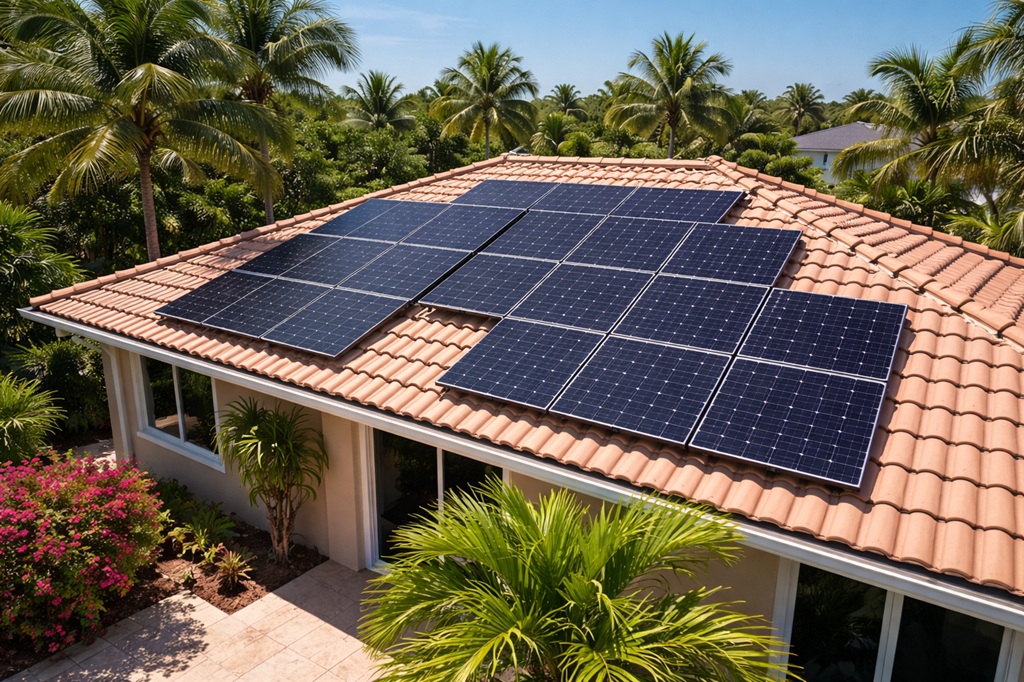
USING PALM DESERT AS AN EXAMPLE, THE FOLLOWING INFORMATION WILL HELP WITH YOUR DECISION ON PURCHASING A SOLAR SYSTEM FOR YOUR HOUSE IN THE COACHELLA VALLEY....Why is solar on a roof important, for example, in a sun drench area like Palm Desert California? Rooftop solar panels are particularly important and advantageous due to the region's exceptional solar resources combined with practical, economic, environmental, and grid-related benefits.
Palm Desert, located in the Coachella Valley desert, is one of the sunniest places in the United States. It receives over 250–300 sunny days per year, with average peak sun hours around 6–7 hours per day (and up to 7–8 in optimal conditions). Solar irradiance is very high, often averaging 6.6+ kWh/m²/day annually, with peaks exceeding 7–8 kWh/m²/day in summer months. This means solar panels here produce significantly more electricity per installed kilowatt than in cloudier regions—often 1.5–2 times more than northern or coastal areas—leading to faster payback periods and greater energy output.
Here are the key reasons why rooftop solar POWER is especially valuable in such an environment: Maximum energy production and cost savings — With intense, consistent sunlight and minimal cloud cover, a rooftop solar system can generate a large portion (or even all) of a home's electricity needs. Air conditioning use is extremely high in Palm Desert's hot climate, driving up summer bills.
Rooftop solar offsets this demand directly at the point of use, slashing utility costs—especially important given California's relatively high electricity rates. Grid relief and blackout prevention — Desert areas like Palm Desert often experience high peak demand from cooling during hot months, straining the grid. Rooftop solar reduces this strain by producing power locally when it's needed most (midday heat peaks). It can also provide resilience during outages, particularly with battery storage, helping avoid blackouts.
Environmental protection in sensitive desert ecosystems — Large-scale utility solar farms in the California deserts (like those near Palm Desert) require vast land areas, potentially impacting fragile habitats, endangered species (e.g., desert tortoise), and natural landscapes. Rooftop solar uses existing built structures (roofs) instead of undeveloped land, minimizing habitat disruption and preserving desert wilderness while still harnessing abundant local sun.
No additional land or transmission needs — Unlike ground-mounted farms that may require new infrastructure, rooftop systems generate power right where it's consumed, reducing the need for long-distance transmission lines that could further affect desert areas. Financial incentives and home value — In high-sun areas, solar installations often pay for themselves quickly (sometimes in 5–8 years) through energy savings, net metering (if available), and any federal/state incentives.
Homes with solar also tend to sell for more. In short, Palm Desert's extreme sunshine makes rooftop solar not just viable, but one of the most efficient and impactful ways to go renewable—delivering big personal savings, grid stability, and environmental benefits.
HOW MUCH CAN I SAVE?
Solar POWER is more affordable than ever — with $0 out-of-pocket options available for qualified homeowners.
There’s no need to pay large upfront costs for panels or installation. Most of our customers begin saving 80–90% on their electric bills from day one after switching to solar.
Remember utility rates continue to rise, BUT your solar energy costs stay predictable, stable, and protected from inflation. The owner of this COMPANY did it? Yes, in the Coachella Valley and reducing his monthly summer bill from $1,300.00 to about $250.00. And...The rest of the months also resulted in savings. And YES, need to see an actual money saving SYSTEM? Just contact the company and the answer is yes.
Going Solar Is Easier Than You Think
Step 1: Get Your Free Solar Estimate Tell us about your home and energy usage.
Step 2: Custom Solar Design We design a system based on your roof, usage, and incentives.
Step 3: Install & Start Saving Our State of California Licensed Team installs your system — you start saving immediately.
FOR THE COACHELLA VALLEY, IT'S AN EXCELLENT INVESTMENT.
in 2026, Solar POWER for a house is most relevant as a hedge against inflation in electricity prices and a way to convert a rising expense into a mostly fixed (or declining) one. If your monthly electric bill is $150+, you have a decent sunny roof, and you plan to stay put for 7+ years, it's usually worth it financially and environmentally.
many homeowners describe it as one of the best "investments" they've made. The relevance drops sharply if you're moving soon, have unsuitable property conditions, or live where electricity is very cheap and stable. To know for sure in your case, get 3 local quotes and run your actual numbers — including your usage, local rates, and any remaining incentives. That math almost always tells the real story.
BUT, BEWARE, LOWER PRICES NORMALLY DO NOT GIVE YOU THE BEST PRODUCTS ON THE MARKET. tHE BEST SOLAR PRODUCERS ARE PRICED HIGHER, NORMALLY FOR A REASON. THEY HAVE BE CERTIFIED TO BE A BETTER RETURN ON THE INVESTMENT. SO, JUST DOUBLE CHECK PROVEN PERFORMANCE OF THE PRODUCTS.
What is BASICALLY required to design a house solar power system?
1. Assess Your Home's Energy Needs
Start by calculating your household's electricity consumption to determine the system size. Review your utility bills to find your average daily or annual usage in kilowatt-hours (kWh). For example, a typical U.S. home uses about 10,000-12,000 kWh per year, but this varies by location and lifestyle. Factor in peak usage times and future changes, like adding electric vehicles or appliances. Improving energy efficiency first—through LED lighting, insulation, or efficient appliances—can reduce the required system size.
2. Evaluate Your Site's Solar Potential
Check how much sunlight your property receives. Use tools like Google's Project Sunroof or PVWatts calculator to estimate solar irradiance based on your location (e.g., Palm Desert, CA, averages 5-6 peak sun hours daily, making it ideal for solar). Assess roof space, orientation (south-facing is best in the Northern Hemisphere), tilt (typically 15-40 degrees), and shading from trees or buildings. A site survey might be needed to confirm viability. If roof space is limited, consider ground-mounted panels.
3. Choose the System Type
Decide between, Grid-tied: Connects to the utility grid for net metering (selling excess power back); simplest and cheapest, no batteries needed.
Off-grid: Independent system requiring batteries for storage; ideal for remote areas but more complex and expensive.
Hybrid: Combines grid-tied with batteries for backup during outages.
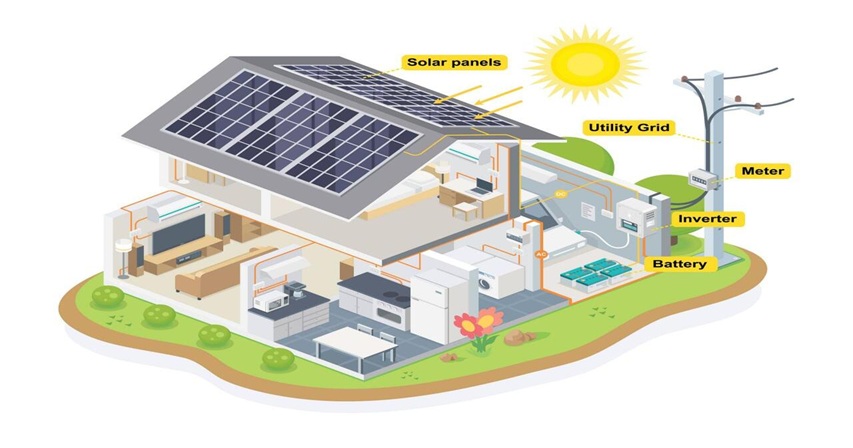
4. Select Key Components: A basic home solar system includes several core parts working together to capture, convert, and store energy.
5. Size the System
Based on your energy needs and site data, calculate the required panel capacity. For instance, if you need 30 kWh/day and get 5 sun hours, aim for at least a 6 kW system (30 / 5 = 6). Factor in system efficiency (typically 75-90%) and seasonal variations. Use online calculators or consult a professional for precise sizing.
6. Consider Regulations, Permits, and Costs
In California, new homes must often include solar-ready designs or PV systems per building codes. Obtain permits from local authorities and utilities (e.g., SCE for interconnection). Factor in incentives, if any. Costs range from $2.50-$4 per watt installed, so a 6 kW system might cost $15,000-$24,000 before ANY incentives.
7. Installation and Maintenance: Hire a licensed contractor for evaluation and installation, SmallER systems if required. Post-installation, monitor performance and clean panels periodically.
For personalized advice, consult local experts or use resources like the California Solar Consumer Protection Guide. This is a high-level overview—actual design may require engineering input for safety and efficiency. TO ANSWER ANY QUESTIONs FOR THE ABOVE INFORMATION, PLEASE CONTACT US.
SOLAR POWER SYSTEM PURCHASING REWARDS.
In California, as of February 2026, the main rewards (incentives like tax credits, rebates, and exemptions) for purchasing and installing a residential solar energy system (photovoltaic panels for home use) have changed significantly compared to prior years. The federal Residential Clean Energy Credit (often called the federal solar tax credit or ITC under Section 25D) expired at the end of 2025 and no longer applies to systems placed in service in 2026 or later. This was a major 30% credit on installation costs that many homeowners previously used.
Here are the primary remaining incentives and benefits available statewide or through utilities/programs in California:
Federal Residential Clean Energy Credit — No longer available for new residential solar installations in 2026. It applied at 30% of qualified costs only for systems installed and placed in service by December 31, 2025.
Self-Generation Incentive Program (SGIP) — This is one of the most valuable remaining incentives, primarily focused on battery storage paired with solar (though solar-only may have limited or no direct rebates in some cases).
SGIP provides rebates for energy storage systems (e.g., home batteries) to encourage backup power and grid resilience.
Rebate amounts vary by utility (PG&E, SCE, SDG&E, SoCalGas), location (higher in high fire-threat districts, disadvantaged communities, or low-income areas), and program bucket (e.g., Equity Resiliency offers up to $1,000–$1,100 per kWh of storage in some cases).
For low-income or disadvantaged communities, incentives can cover significant portions of battery costs, making solar + storage more affordable.
Residential solar + storage equity incentives became available or expanded in 2025. Check selfgenca.com for current reservations and eligibility.
Disadvantaged Communities – Single-Family Affordable Solar Homes (DAC-SASH) — For qualifying low-income homeowners in disadvantaged communities (top 25% per CalEnviroScreen) served by PG&E, SCE, or SDG&E.
Offers up to $3 per watt for systems up to 5 kW (potentially $15,000+ or covering most/all costs for small systems).
Property Tax Exclusion for Solar Energy Systems — California excludes the added value of qualifying solar energy systems (including solar + storage in some cases) from property taxes.
This is typically a 100% exclusion for the system value (or 75% for dual-use equipment). Applies to systems installed between January 1, 1999, and June 30, 2026 (scheduled to end after 2026, so check extensions).
Local/Utility-Specific Rebates — Vary by utility provider (e.g., PG&E, SCE, SDG&E, or municipal utilities like Alameda Municipal Power). Examples include:
Income-qualified solar rebates (e.g., $500 one-time in some areas).
Programs like GRID (for full-cost coverage in certain cases) or other equity-focused solar + battery rebates.
Check your utility's website (e.g., pge.com, sce.com) for current offerings, as some provide incentives for solar paired with storage or energy efficiency.
Net Billing Tariff (NEM 3.0) — Not a direct rebate, but the current compensation structure for excess solar energy exported to the grid (replaces older net metering). It pays lower rates for exports (often ~$0.08/kWh average vs. retail rates), so pairing solar with battery storage maximizes savings by using more self-generated power.
California no longer has broad statewide solar rebates like the old CSI program (which ended years ago). The focus has shifted to equity programs for low-income/disadvantaged households, battery incentives via SGIP, and property tax protections. Incentives can stack (e.g., SGIP + DAC-SASH + property tax exclusion).
For the most accurate and personalized details, visit official sources like:
selfgenca.com (for SGIP) cpuc.ca.gov (California Public Utilities Commission)
Energy.ca.gov (for IRA-related programs, though mostly focused on efficiency/appliances rather than pure solar)
Dsireusa.org (search for California solar)
Property Assessed Clean Energy (PACE) is a financing option for residential solar, allowing homeowners to pay for systems through an additional, long-term assessment on their property tax bills. It provides 100% upfront financing (up to 15% of home value) with no money down, often accepting lower credit scores.
Your utility provider's solar page
Eligibility often depends on income, location, utility, and whether you pair solar with storage. Consult a certified solar installer or tax professional for your specific situation, as programs can have wait lists, funding limits, or updates.
7 STEPS FOR YOU TO GO SOLAR.....
1. Site Survey 2. System Design 3. Permits 4. Installation 5. Inspection 6. Utility Connection 7. Power is ON
THE BOTTOM LINE.....
The bottom line for purchasing a home solar system in 2026 (as of February 2026) is that it's still a solid long-term investment for most homeowners, especially in high-electricity-rate states like California, but the economics have shifted noticeably compared to prior years. The key change: The federal Residential Clean Energy Credit (the 30% solar tax credit) expired for systems placed in service after December 31, 2025.
This means no broad federal subsidy for homeowner-owned systems installed in 2026 onward (though some commercial or specific legacy rules might apply differently, and leased/PPA options can sometimes capture other benefits indirectly). Upfront Cost Breakdown Average system size for a typical U.S. home: Around 7–12 kW (depending on your energy use, roof space, and location).
Cost per watt (installed, before any remaining incentives): Roughly $2.50–$3.50, with national averages cited around $2.58–$2.84 per watt. Total gross cost (before local incentives): For a 7–8 kW system: Often $20,000–$30,000.
For a larger 10–12 kW system: Commonly $25,000–$40,000+ (some sources cite $25k–$45k range overall).
In lower-sun or lower-rate areas: Closer to 8–12+ years.
Long-term value: Solar systems last 25–30+ years with warranties, so after payback you get "free" electricity (minus minor maintenance). Lifetime savings can still reach tens of thousands of dollars, especially as utility rates rise (many forecasts show continued increases).
Other perks: Energy independence, hedge against rate hikes, increased home value (studies show solar adds resale value), and environmental benefits.
California-Specific Notes (Since You're in the Coachella Valley in California), California remains one of the best states for solar due to high electricity rates (often among the nation's highest), excellent sun exposure in the desert region like the Coachella Valley, and remaining strong incentives: Net metering (NEM 3.0) still provides credits for excess power, though less generous than before.
Battery incentives via SGIP (Self-Generation Incentive Program) can rebate hundreds to $1,000+ per kWh for storage, especially in high-fire-threat or low-income areas.
Local/utility programs (e.g., through SCE or others) and property tax exemptions.
Low-income/disadvantaged community programs can sometimes make solar very low-cost or free.
The Coachella Valley's sunny climate means higher production and faster returns than many U.S. locations. Bottom-Line Recommendation. Yes, worth it if you plan to stay in your home 7–10+ years, have good roof/sun exposure, and high utility bills—savings compound over decades.
Renewable Power USA, LLC, is a solar energy company SERVICING THE MOST SUN DRENCHED SUCCESSFUL FINANCIAL METROPOLIAN AREA OF THE COUNTRY, YES, THE COACHELLA VALLEY.
Renewable Power USA, LLC, is a trusted solar company THAT HAS HELPED hundreds of homeowners switch to clean, affordable energy. Our customers are reducing their electric bills, protecting themselves from rising utility costs, and taking control of their energy future. With a PROFESSIONAL, hands-on approach, we make going solar simple, efficient, and financially rewarding from start to finish.
YES, IT ALL COMES DOWN TO THE CERTIFIED NUMBERS OF YOUR PRESENT SERVICE, to have an excellent view of your projected costs AND REWARDS.
Renewable Power USA, specializes in residential and commercial solar panel installations, helping customers transition to clean, affordable solar energy to reduce electricity bills and promote sustainable power solutions.
Services: Renewable Power USA provides solar system installations, free energy analyses/quotes, and emphasizes customized home energy solutions.
Presence: THE COMPANY NOW have a strong local focus AND have expanded nationwide, with AFFILIATES in CALIFORNIA, Florida, Texas, and New Mexico.
RENEWABLE POWER USA, LLC, has a wealth of information on obtaining financial assistance to purchase the SOLAR EQUIPMENT AND INSTALLATION PROJECT. THERE ARE SOLAR INSTALLATION FINANCIAL ASSISTANCE PROGRAMS STILL AVAILABLE.
RENEWABLE POWER USA, LLC, IS a regional player in the solar industry, focused on homeowner savings through solar MANUFACTURING EXPERTISE AND PROFESSIONAL LICENCED SOLAR EQUIPMENT INSTALLERS THAT HAVE AN EXCELLENT "PROVEN RECORD" WHILE FULLFILLING THE REQUIREMENT OF BEING "LICENSED".
SO......PLEASE CONTACT US, ALONG WITH OTHER "COMPANIES", TO SUBMIT ALL OF OUR BEST OFFERS.